
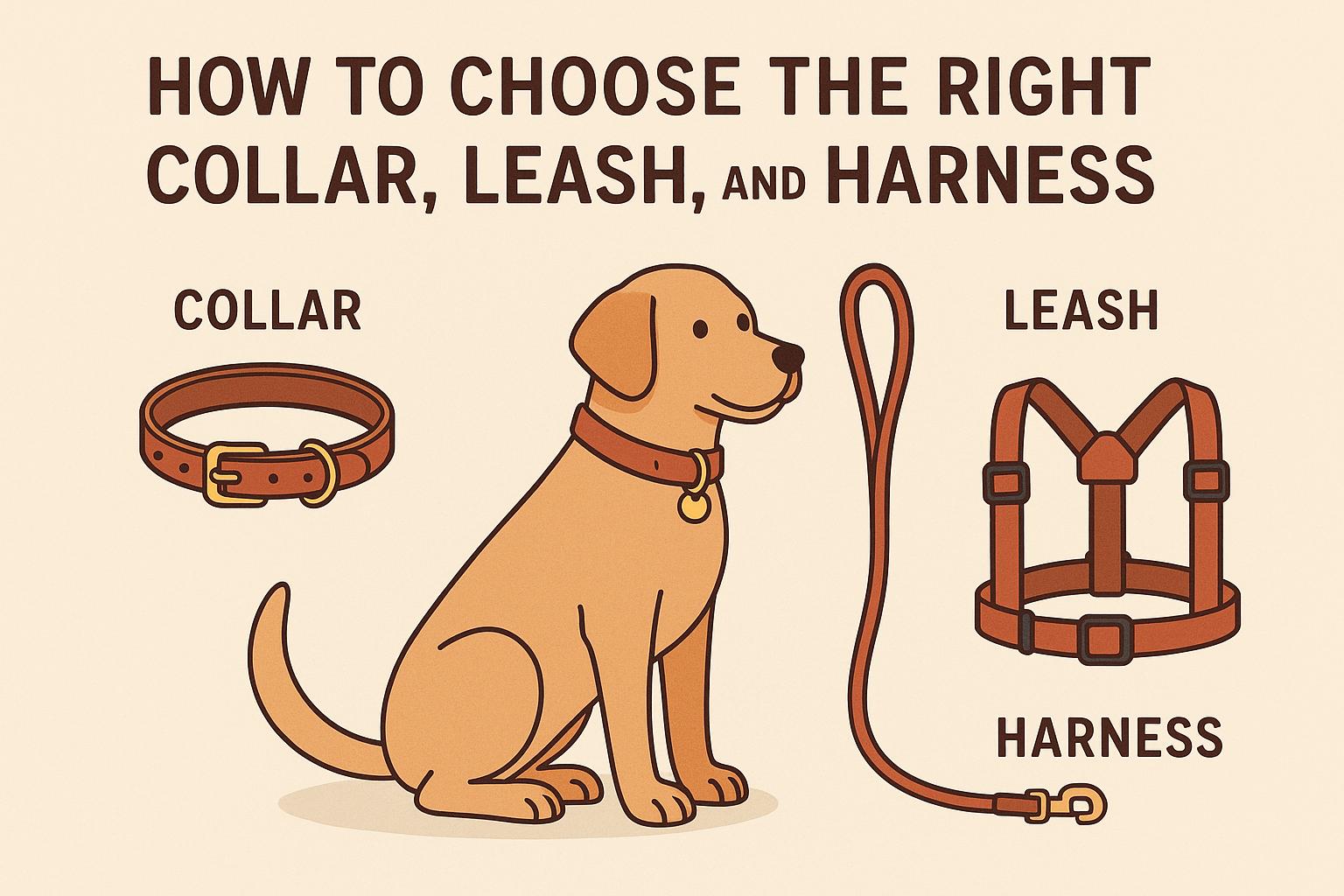
A comprehensive understanding of your dog’s needs is critical when choosing equipment such as collars, leashes, or harnesses. This understanding requires an assessment of various factors, including breed, size, age, and temperament, all of which contribute significantly to the type of equipment that would be most appropriate. Moreover, your training objectives and any potential health issues, like neck or back problems, should influence your choice of gear.
Importance cannot be understated when it comes to collars as they fulfill both functional and identification roles for dogs. Among the common types of collars, there are specific distinctions to consider:
Flat Collars: These collars are considered standard and are largely suitable for a majority of dogs. Their design is simple, offering adjustability, and they are predominantly utilized for routine daily activities. They provide a space to attach identification tags, thereby enhancing the chances of recovering a lost pet.
Martingale Collars: Especially ideal for dogs that manage to slip out of conventional collars, martingale collars offer more control without causing choking. These are particularly advantageous for breeds like greyhounds known for their slender heads. The design helps in providing a secure fit and prevents the collar from being pulled over the dog’s head.
Head Collars: These are intended for dogs that necessitate additional direction during walks. Often used as a training tool, they gently guide the dog’s head, allowing you to control their body’s movement efficiently. This collar is beneficial for managing exuberant or stubborn dogs by redirecting their focus during training.
Leashes serve as the critical link between you and your dog, underscoring the importance of selecting one that offers comfort and control. Several considerations are crucial when determining the appropriate leash:
The material of the leash plays a vital role in its durability and comfort. Leather leashes are durable and become more supple with use, offering a comfortable grip which is convenient for long walks. Nylon leashes are affordable and lightweight, making them an everyday choice for many dog owners. For dogs that have a penchant for chewing, chain leashes are recommended due to their resistance to wear.
The length of the leash is another important factor. A regular leash length of 4 to 6 feet is typically suitable for day-to-day walks, providing a balance between control and freedom. However, for training purposes or when giving the dog more room to explore, longer leashes or retractable variants can be more beneficial.
Harnesses can be exceptionally beneficial, especially for dogs that have neck issues or exhibit excessive pulling. By distributing pressure across the chest and shoulders, harnesses minimize the risk of injury associated with pulling, particularly in smaller dogs where neck injuries could be more severe.
Back-clip harnesses are most suitable for small or well-trained dogs as they do not hinder natural movement. These types of harnesses clip on the back of the dog, which is convenient for basic walks.
Front-clip harnesses, in contrast, are often used for training purposes. They offer superior control by redirecting pulling forces toward the handler. This can be especially useful in teaching dogs not to pull during walks, aiding in the development of good walking habits.
In conclusion, selecting the right collar, leash, or harness is about striking a balance between functionality and comfort. To ensure a harmonious connection with your pet, it is crucial to evaluate your dog’s specific needs. Keep in mind the guidance of professionals if uncertainty arises, as properly chosen equipment can greatly enhance safety and training effectiveness. Ultimately, the right choice can fortify the overall bond between you and your furry companion, enriching your shared experiences. As you navigate this decision, consider consulting resources like American Kennel Club’s Expert Advice for additional insights into choosing pet accessories aligned with both safety and style.